

Table of Contents
- Why a Printable Debt Payoff Tracker Template Beats an App
- Debt Payoff Strategies: Snowball vs. Avalanche
- How to Track Debt Payments with a Monthly Routine
- Using a Debt Snowball Worksheet for Quick Wins
- What to Look for in a Printable Debt Payoff Tracker Template
- Integrating Your Tracker with Budgeting Apps and Debt Consolidation Plans
- Frequently Asked Questions
Last Updated: September 21, 2026
Why a Printable Debt Payoff Tracker Template Beats an App
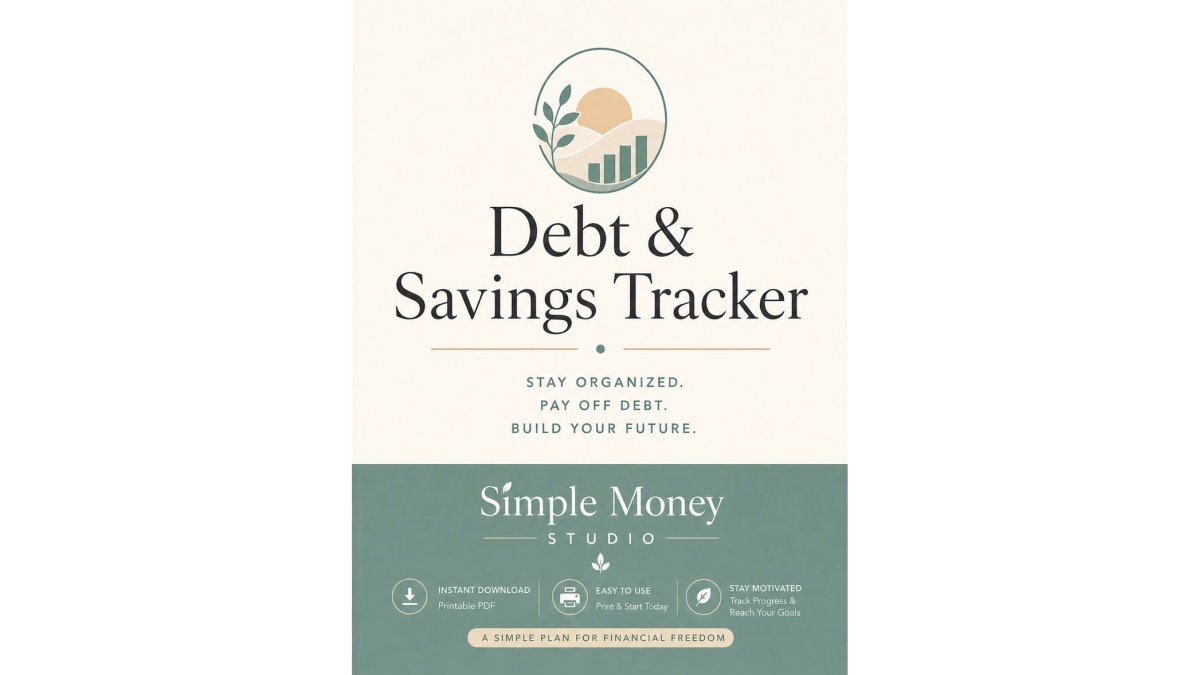
A printable debt payoff tracker template is a paper worksheet for logging balances, payments, and payoff dates by hand. It often beats an app for one reason: it removes the friction that makes people quit digital tools, turning abstract numbers into something you can see, touch, and color in.

Three practical wins stand out:
- No login, no subscription, no app update breaking your routine
- Your whole household can see the same sheet on the fridge or a bulletin board
- You can update it in under five minutes a month, which is the real reason people stick with it
Debt Payoff Strategies: Snowball vs. Avalanche
Two strategies do most of the heavy lifting in any repayment plan: the debt snowball and the debt avalanche. Both require the same two inputs, the minimum payment on every debt, plus one extra dollar amount you can send each month. The difference is only where that extra dollar lands.
- Debt snowball: pay minimums everywhere, throw every extra dollar at the smallest balance. When it hits zero, roll its entire payment (minimum + extra) into the next-smallest balance.
- Debt avalanche: pay minimums everywhere, throw every extra dollar at the highest interest rate. When it hits zero, roll its payment into the next-highest rate.
Here's how they compare in practice:
| Strategy | Target Order | Main Advantage | Main Trade-off | Best For |
|---|---|---|---|---|
| Debt Snowball | Smallest balance first | Fast wins; fewer accounts to manage sooner | Usually pays more total interest | People who need momentum |
| Debt Avalanche | Highest interest rate first | Lowest total interest paid | First win can take months | People motivated by math |
Why the Avalanche Saves More (and How Much)
The avalanche wins on math because interest compounds against the highest rate. Every dollar moved off a 24% credit card and onto a 6% auto loan stops accruing at 24%. The snowball may clear a small 6% balance while a larger 24% balance keeps growing.
How to Choose Your Strategy
Pick the snowball if you've abandoned payoff plans before, have many small balances, or share the plan with a partner who needs to see wins. Pick the avalanche if your rates are widely spread, your balances are large and similar, or watching total interest drop keeps you going.
The Hybrid Most People Actually Use
A practical middle path: run the avalanche on your two or three highest-rate accounts, but if a small balance is within one or two payments of being cleared, knock it out first for the psychological win. Decide the rule in advance and write it down so you're not renegotiating every month.
How to Track Debt Payments with a Monthly Routine
Tracking debt payments works best on a fixed monthly schedule, not daily. Pick the same day every month, update every balance, and log your total paid off. A fixed day turns tracking into a habit instead of a decision, and decisions get skipped in busy months.
- Gather your latest statements for each creditor
- Write the current balance next to the starting balance
- Log the minimum payment and any extra payment you sent
- Calculate total paid off so far
- Shade in one box on your progress bar for each milestone
- Note one win and one adjustment for next month
Handling Variable Income Without Losing the Thread
If your income changes month to month from side gigs, tips, or seasonal work, the routine still works, log what actually came in and what you actually sent. Two habits make this easier:
- Set a floor, not a target. Decide the smallest extra payment you can commit to every month no matter what, and treat anything above that as a bonus. Your tracker then shows a guaranteed baseline plus a variable top-up.
- Bank the surplus in a payoff buffer. In a strong month, park the extra in a separate savings account instead of sending it all to debt. In a weak month, draw from the buffer to keep your payment steady. Your balances still fall on schedule, and you avoid the whiplash of a big payment one month and a minimum-only month the next.
The Reconciliation Step Competitors Skip
Once a quarter, compare your tracker against your actual statements. Discrepancies come from interest you didn't log, fees you didn't notice, and payments that posted after your check-in. Catching a $35 late fee or forgotten annual fee is worth the ten minutes.
Make the Routine Stick
The routine fails when it feels like homework. Three mechanisms fix that:
- Pair it with something you already do. Update the tracker on the same day you pay rent or review your budget, so it rides an existing habit.
- Reward the milestones, not the finish line. A payoff that takes three years needs intermediate rewards. Decide in advance what you'll do when the first account hits zero, a dinner, a movie, a day off, and write it on the tracker next to that account.
- Keep the sheet visible. A tracker in a drawer is a tracker you forget. Fridge, bulletin board, or the inside cover of a planner all work; the point is that you see it without opening anything.
Using a Debt Snowball Worksheet for Quick Wins
A debt snowball worksheet lists your debts from smallest to largest and shows where your extra payment goes each month. The order is the point: attack the smallest balance, clear it, then roll that payment into the next one.
What to Look for in a Printable Debt Payoff Tracker Template
The best printable debt payoff tracker template fits your strategy, tracks every creditor in one place, shows progress visually, and stays readable after repeated printing. Skip features you'll never use.

Use this checklist before you commit to a template:
- Includes a payoff strategy page covering both snowball and avalanche
- Has columns for balance, minimum payment, interest rate, and extra payment
- Provides progress bars or a visual tracker you can shade in
- Includes a monthly check-in page and a quarterly summary
- Prints legibly in black and white on standard paper
- Leaves room to write, not just type
Accessibility and Print-Friendly Design Tips
Print-friendly design means high contrast, large writing space, and no reliance on color to convey meaning. A template that only works in color fails anyone printing in grayscale or with low vision.
Three things to check before you print:
- Contrast: black text on white paper, with clear lines between rows
- Font size: large enough to read at arm's length without squinting
- Writing space: rows tall enough for real handwriting, not cramped boxes
Integrating Your Tracker with Budgeting Apps and Debt Consolidation Plans
Your tracker works harder when it connects to the rest of your money system. Pair it with a monthly budget so you know how much extra can go toward debt, and revisit the numbers quarterly.

Frequently Asked Questions
Is there a free debt payoff tracker available?
You can find free debt payoff tracker templates online, but they often lack structure for choosing a repayment strategy or tracking progress over time. A paid printable like the Debt & Savings Tracker from Simple Money Studio ($16.99) includes guided pages for snowball and avalanche methods, progress bars, and monthly check-ins. If you want a free option, a basic spreadsheet works, but you will need to build the strategy and motivation prompts yourself. The key is picking a format you will actually update each month.
Can I create a debt payoff tracker in Excel?
Yes, you can build a debt payoff tracker in Excel or Google Sheets. You would need columns for creditor name, outstanding balance, interest rate, minimum payment, and extra payment. You can also add formulas for amortization and a payoff date. However, many people find spreadsheets overwhelming or forget to open them. A printable debt payoff tracker template keeps the process visible on your desk or fridge, which helps with consistency. If you prefer digital, use Excel; if you prefer hands-on, print one.
What is the best debt payoff planner?
The best planner is the one you will use every month. Look for a template that includes space for multiple creditors, a chosen repayment strategy (snowball or avalanche), progress bars, and a monthly check-in. The Debt & Savings Tracker from Simple Money Studio covers all of these for $16.99 and pairs with their 1-Hour Budget Setup Guide. If you want a complete system, the Starter Pack ($47.96) includes four workbooks. Avoid planners that only list balances without guiding your strategy or motivation.
How can I create a debt payoff plan?
Start by listing every debt with its outstanding balance, interest rate, and minimum payment. Choose a repayment strategy: debt snowball (smallest balance first) or debt avalanche (highest interest rate first). Then decide how much extra you can send each month. Use a printable debt payoff tracker template to record payments and see progress visually. Update it monthly, and review quarterly. Pair it with a monthly budget to ensure you are not adding new debt. The Debt & Savings Tracker walks you through each step.
What is the debt snowball method vs. debt avalanche?
The debt snowball method focuses on paying off the smallest balance first, regardless of interest rate. This gives you quick wins and motivation to keep going. The debt avalanche method targets the highest interest rate first, which saves you more money over time but may take longer to see a balance disappear. Both are debt payoff strategies that work. Choose snowball if you need encouragement; choose avalanche if you want to minimize interest. A printable debt snowball worksheet can help you track either approach.